


India Bowled Over for 76 as Questions Grow Over Leadership and Team Strategy
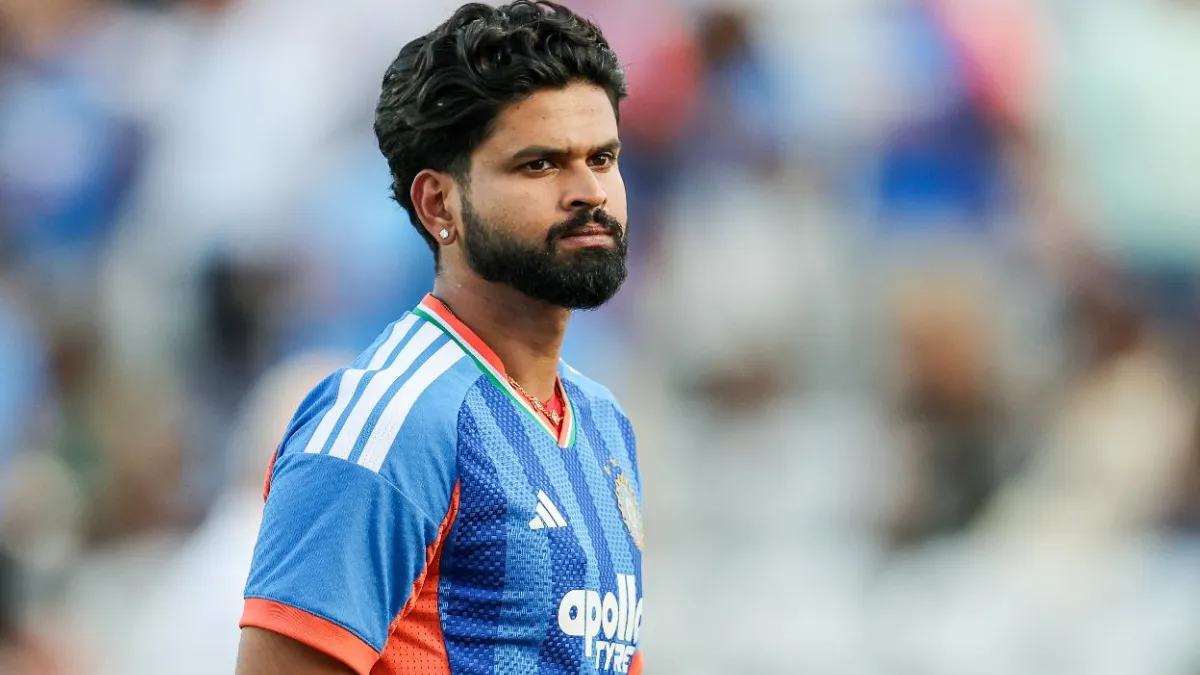
Shreyas Iyer has come under intense scrutiny after India suffered their heaviest defeat by runs in T20 International cricket, collapsing for just 76 while chasing 202 against England in Nottingham. The crushing 125-run loss has not only exposed the team’s batting frailties but has also sparked debate over captaincy, team selection, and tactical decisions made by the coaching staff.
Only a few months ago, India were celebrating another successful T20 World Cup campaign and were regarded as one of the strongest teams in the format. That confidence has quickly faded during the ongoing tour of Ireland and the United Kingdom, where the team has struggled to produce consistent performances. Following a disappointing series in Ireland, India now finds itself on the verge of losing another assignment, raising concerns about the direction of the squad under its new leadership.
Record Defeat Highlights India’s Batting Collapse
Chasing a competitive target of 202, India never settled into the contest. The innings unraveled rapidly as England’s pace attack dismantled the top order inside the powerplay. The visitors were eventually bowled out for just 76 in 11.4 overs, registering their biggest defeat by runs in T20 International history.
The defeat also marked a worrying trend for the national side, which has now gone several matches without a victory. For a team that recently dominated world cricket in the shortest format, the sudden drop in performance has become a major talking point.
The match was played in the presence of former India captain MS Dhoni, who was celebrating his 45th birthday, adding further attention to a game that ended in one of India’s most disappointing T20 performances.
Shreyas Iyer’s Captaincy Under the Spotlight
With Shreyas Iyer leading India’s T20 side for the first time, expectations were naturally high. However, the team’s inconsistent displays throughout the tour have placed additional pressure on the new captain.
While a captain cannot be held responsible for every dismissal or mistake on the field, leadership is often judged by how effectively a team responds during difficult situations. India’s inability to recover after early setbacks has led many observers to question whether the tactical approach and on-field decision-making have been effective enough.
The defeat has also prompted discussions about the broader planning of the squad, including whether the current combination provides the right balance in overseas conditions.
Team Selection and Batting Order Raise Fresh Questions
Several tactical decisions made during the match have attracted criticism.
India fielded a batting lineup featuring a heavy left-handed presence, a combination that appeared different from the approach generally preferred by head coach Gautam Gambhir. Traditionally, teams aim to maintain a right-left batting combination to disrupt bowlers’ rhythm and create more scoring opportunities.
Another decision that surprised many came during the chase when Harshit Rana was promoted ahead of the more experienced Shivam Dube. With India already under pressure after losing early wickets, sending a lower-order player before an established batter was viewed as a risky move.
Whether the management intended to use Rana’s batting ability or experiment with the lineup, the move did little to change the outcome. Critics argued that India appeared to lose belief in the chase far too early despite the target remaining achievable on a batting-friendly surface.
England’s Fast Bowlers Dominate the Powerplay
England’s pace attack ensured India never built any momentum.
Openers Abhishek Sharma and Vaibhav Suryavanshi began positively, but the innings changed dramatically within a span of just 19 deliveries. Josh Tongue and Jofra Archer struck repeatedly, removing five of India’s top-order batters and effectively deciding the contest before the halfway mark of the innings.
Abhishek Sharma departed after finding a fielder at point, while Suryavanshi was dismissed attempting to deal with Archer’s extra bounce. Ishan Kishan followed after mistiming a pull shot, and captain Shreyas Iyer also fell trying to clear the boundary against Archer.
Axar Patel soon became Archer’s third victim, leaving India’s batting lineup in complete disarray. With wickets falling regularly, the visitors never recovered from the early collapse.
Also read: Prithvi Shaw Breakup Rumors: Social Media Activity Sparks Speculation About Cricketer’s Relationship
Prince Yadav Provides a Bright Spot for India
Despite the disappointing result, young fast bowler Prince Yadav delivered one of the few encouraging performances for India.
The 24-year-old made an immediate impact after entering the attack during the powerplay. His very first delivery produced a major breakthrough as he clean-bowled England captain Jos Buttler with a perfectly executed yorker.
Prince continued to impress by dismissing Harry Brook later in the innings. Bowling consistently around the 140 km/h mark, he maintained disciplined line and length while generating useful bounce from the surface. His control prevented England’s batters from scoring freely during several key overs.
His performance suggested that India may have found another promising pace option capable of competing at the international level.
Middle-Overs Fightback Falls Short
India briefly fought back during the middle overs through disciplined bowling from Varun Chakravarthy and Harshit Rana.
Captain Shreyas Iyer introduced Rana at an important stage, and the fast bowler responded by dismissing Jacob Bethell and Tom Banton off consecutive deliveries. Those wickets briefly slowed England’s scoring rate and offered India hope of limiting the total.
However, Sam Curran quickly shifted the momentum once again. The all-rounder remained unbeaten on 41 from just 24 deliveries, accelerating during the closing stages to push England beyond the 200-run mark.
Phil Salt, who had endured a relatively quiet start, recovered impressively to score 70 and laid the foundation for England’s commanding total.
Also read: Shreyas Iyer Fined ₹24 Lakh for Slow Over Rate After Punjab Kings’ Win Over Chennai Super Kings
Bigger Challenges Await India
The scale of the defeat has intensified conversations about India’s preparation, squad balance, and leadership ahead of future international tournaments.
While a single loss does not define a captain or a team, consecutive disappointing performances have highlighted areas requiring urgent attention. Improving batting consistency, making clearer tactical decisions, and finding the right playing combination will be priorities if India hopes to reverse its fortunes during the remainder of the tour.
For Shreyas Iyer, the coming matches could prove especially significant. Strong performances would help restore confidence in his leadership, while further setbacks are likely to keep the spotlight firmly on India’s captaincy and team management.
As the series continues, India will be looking for a quick response to prevent one difficult defeat from becoming a prolonged period of uncertainty.