

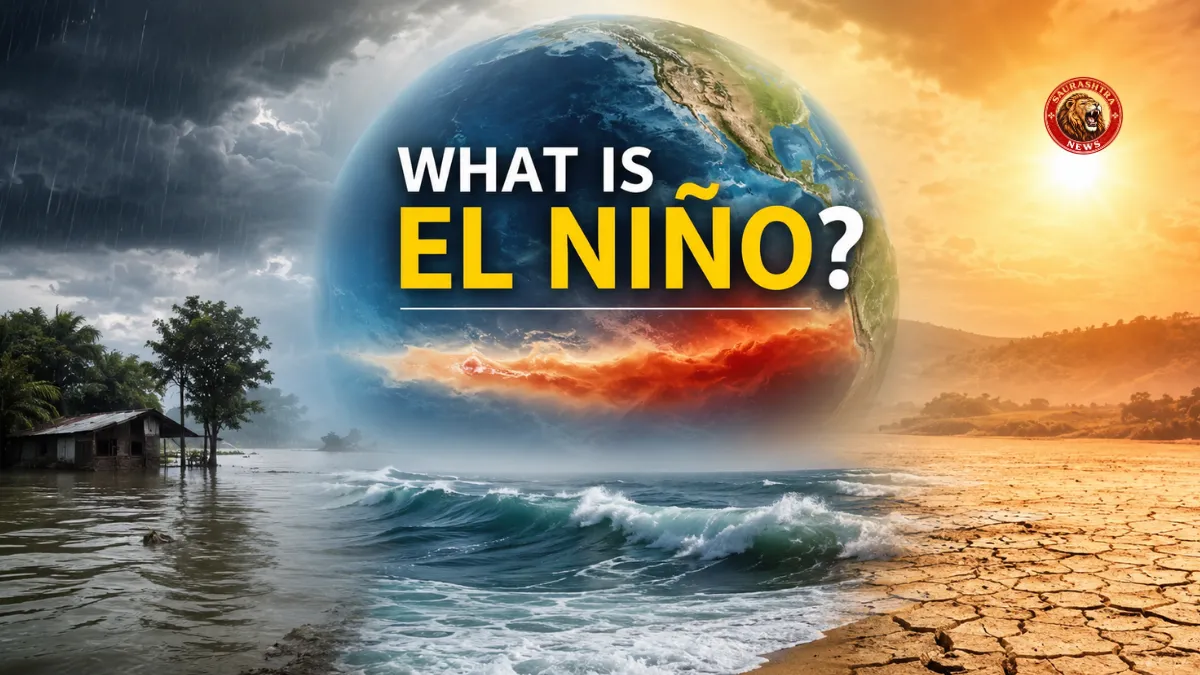

What is El Niño? It is a natural climate pattern that develops in the Pacific Ocean and affects weather conditions across many parts of the world. El Niño can change rainfall patterns, increase temperatures, trigger floods in some regions, and cause droughts in others. Scientists closely monitor this weather event because it has a strong impact on agriculture, water supply, fisheries, and daily life.
Although El Niño begins in the ocean, its effects are felt far beyond coastal regions. Countries in Asia, Africa, North America, South America, and Australia can all experience unusual weather during an El Niño year. Understanding how this climate phenomenon works is important because it helps governments, farmers, and communities prepare for possible weather changes.
Understanding the Meaning of El Niño
The term “El Niño” comes from Spanish and means “The Little Boy” or “Christ Child.” Fishermen in South America first used this name centuries ago because the unusual warming of ocean waters often appeared around Christmas time.
El Niño refers to the warming of sea surface temperatures in the central and eastern Pacific Ocean. Normally, trade winds push warm water toward Asia and Australia, allowing colder water to rise near the coast of South America. During El Niño, these winds weaken, and warm water spreads eastward across the Pacific Ocean.
This change may sound simple, but it affects the atmosphere and weather systems around the globe. Rainfall, storms, temperatures, and wind patterns can all shift because of El Niño.
What Causes El Niño?
El Niño develops because of changes in atmospheric pressure and ocean temperatures across the Pacific Ocean. The process usually starts when trade winds weaken or slow down.
Under normal conditions, strong trade winds blow from east to west across the Pacific Ocean. These winds push warm surface water toward Indonesia and Australia. At the same time, cooler water rises near South America in a process called upwelling.
During El Niño, the trade winds weaken. Warm water that normally stays in the western Pacific begins moving eastward toward the coast of South America. As a result, ocean temperatures rise in the central and eastern Pacific regions.
The warmer ocean affects the atmosphere above it. Clouds and rainfall patterns shift to different areas, creating unusual weather conditions around the world.
Scientists still study why trade winds weaken during El Niño events, but they know that ocean-atmosphere interactions play a major role.
How Often Does El Niño Occur?
El Niño does not happen every year. It usually develops every two to seven years and can last from several months to more than a year.
Some El Niño events are weak, while others become very strong and create severe weather changes worldwide. The strength and duration of each event can vary significantly.
Meteorologists monitor ocean temperatures, wind patterns, and atmospheric pressure to predict when El Niño may develop. Modern satellite technology and climate models help scientists forecast these events more accurately than in the past.
What is El Niño and How Does It Affect Weather?
One of the most important questions people ask is: What is El Niño and how does it affect weather around the world?
El Niño changes global weather patterns because the Pacific Ocean plays a major role in Earth’s climate system. When ocean temperatures rise, atmospheric circulation changes as well.
In some regions, El Niño brings heavy rainfall and flooding. In other places, it causes droughts and extremely dry conditions. Temperatures in many countries may become warmer than usual.
The exact impact depends on the location and the strength of the El Niño event.
Effects of El Niño in Different Parts of the World
South America
Countries such as Peru and Ecuador often receive heavy rainfall during El Niño. Flooding, landslides, and damage to infrastructure can occur. Warmer ocean waters may also reduce fish populations because nutrient-rich cold water becomes less available.
Australia and Southeast Asia
Australia, Indonesia, and nearby regions often experience drought conditions during El Niño years. Reduced rainfall can lead to water shortages, crop failures, and wildfires.
North America
In the United States, El Niño can affect winter weather patterns. Southern states may receive wetter conditions, while northern regions sometimes experience milder winters.
India
El Niño can weaken the Indian monsoon. Since agriculture in India depends heavily on monsoon rainfall, weak monsoons may reduce crop production and affect water supplies.
Africa
Some African regions may face droughts during El Niño, while others experience heavier rainfall. These changes can influence food production and local economies.
The Relationship Between El Niño and La Niña
El Niño is part of a larger climate cycle called the El Niño-Southern Oscillation, often shortened as ENSO.
The opposite phase of El Niño is called La Niña. During La Niña, Pacific Ocean temperatures become cooler than normal instead of warmer.
While El Niño often brings warmer global temperatures, La Niña can create cooler conditions in some areas. Weather effects during La Niña are generally opposite to those seen during El Niño.
For example, areas that become dry during El Niño may experience more rainfall during La Niña.
Both El Niño and La Niña are natural climate events, but they can strongly influence global weather systems.
Impact of El Niño on Agriculture
Agriculture is one of the sectors most affected by El Niño. Farmers depend on stable weather patterns for planting and harvesting crops.
During El Niño years, droughts can reduce crop yields in some countries. Lack of rainfall affects soil moisture and irrigation systems. Crops such as rice, wheat, corn, and sugarcane may suffer from water shortages.
On the other hand, excessive rainfall in some regions can flood farmland and damage crops. Farmers may also struggle with increased pests and plant diseases because changing weather conditions affect ecosystems.
Food prices sometimes rise during strong El Niño events due to lower agricultural production.
How El Niño Affects Marine Life
El Niño has a major impact on ocean ecosystems and marine species.
Normally, cold water rising near South America contains nutrients that support fish populations. During El Niño, warmer surface water prevents this nutrient-rich water from reaching the surface.
As a result, fish populations may decline, affecting fishermen and seafood industries. Birds and marine mammals that depend on fish for food may also suffer.
Coral reefs are another concern. Warmer ocean temperatures can cause coral bleaching, which damages reef ecosystems.
Marine biodiversity may change during strong El Niño periods because many species struggle to adapt to changing ocean conditions.
El Niño and Climate Change
Scientists continue studying the relationship between El Niño and climate change. Although El Niño is a natural climate pattern, global warming may influence its intensity and effects.
Rising global temperatures can increase the amount of heat stored in the oceans. Some researchers believe this could lead to stronger or more frequent extreme weather events during El Niño years.
Climate change may also increase the risks of floods, heatwaves, droughts, and storms connected to El Niño.
However, scientists are still researching exactly how global warming affects future El Niño patterns.
Famous El Niño Events in History
Several El Niño events have caused significant global impacts over the years.
The 1982–1983 El Niño
This event was one of the strongest recorded at the time. It caused severe flooding in South America, droughts in Australia and Indonesia, and economic losses worldwide.
The 1997–1998 El Niño
The 1997–1998 event became one of the most powerful El Niño episodes in modern history. Many countries experienced extreme weather conditions, including storms, floods, droughts, and heatwaves.
The 2015–2016 El Niño
This El Niño event led to record-breaking global temperatures. Many regions faced severe droughts, coral bleaching, and agricultural damage.
These historical events showed how strongly El Niño can influence the global climate and economy.
How Scientists Predict El Niño
Modern technology helps scientists monitor ocean and atmospheric conditions closely.
Researchers use satellites, weather stations, ocean buoys, and computer models to track changes in sea surface temperatures and wind patterns.
One important monitoring system is the network of buoys placed across the Pacific Ocean. These instruments collect real-time data about ocean temperatures, currents, and atmospheric pressure.
Climate experts analyze this information to predict whether El Niño conditions may develop in the coming months.
Early forecasts help governments and communities prepare for possible impacts such as floods, droughts, or food shortages.
Economic Effects of El Niño
El Niño can affect the global economy in many ways.
Agricultural losses may increase food prices. Floods and storms can damage roads, homes, and infrastructure. Droughts may reduce hydroelectric power production in some countries.
Fishing industries often suffer because warmer waters reduce fish populations. Tourism can also be affected when extreme weather damages beaches, coral reefs, or natural attractions.
Insurance companies sometimes face large financial losses due to weather-related disasters during strong El Niño years.
Governments often spend significant amounts of money on disaster relief and recovery efforts.
Health Risks Linked to El Niño
El Niño can also influence public health.
Heavy rainfall and flooding may increase waterborne diseases such as cholera. Warmer temperatures can create favorable conditions for mosquitoes, increasing the spread of diseases like malaria and dengue fever.
Droughts and food shortages may lead to malnutrition in vulnerable communities.
Heatwaves during El Niño periods can also increase health risks for elderly people and individuals with existing medical conditions.
Public health agencies often prepare emergency plans when strong El Niño conditions are expected.
Can El Niño Be Prevented?
El Niño is a natural climate phenomenon, so it cannot be prevented. However, scientists and governments can reduce its impacts through preparation and planning.
Improved forecasting systems allow countries to prepare for possible floods, droughts, and storms. Farmers can adjust planting schedules and choose crops that tolerate dry conditions better.
Water conservation programs help regions prepare for droughts. Emergency response systems can reduce damage during severe weather events.
International cooperation is also important because El Niño affects many countries at the same time.
Why Understanding El Niño Matters
Understanding El Niño is important because it affects weather, food supplies, water resources, economies, and ecosystems worldwide.
Millions of people depend on accurate climate forecasts to prepare for changing conditions. Farmers need rainfall predictions, fishermen rely on healthy oceans, and governments must plan for disasters.
As climate science improves, experts continue learning more about how El Niño works and how societies can adapt to its effects.
Greater awareness also helps communities respond more effectively when unusual weather patterns occur.
Also Read: Monsoon Start in Gujarat 2026: Forecast Suggests Delayed Arrival and Uneven Rainfall Across State
Conclusion
What is El Niño? It is a powerful climate phenomenon caused by the warming of Pacific Ocean waters, and it has far-reaching effects on global weather systems. From droughts and floods to rising temperatures and changing marine ecosystems, El Niño influences life in many parts of the world.
Although it is a natural event, El Niño can create serious environmental, economic, and social challenges. Scientists continue studying this climate pattern to improve forecasts and help communities prepare for its impacts.
By understanding how El Niño works and why it matters, people can make better decisions about agriculture, water management, disaster planning, and environmental protection.